
.jpg?width=1280&height=720&name=image%20(85).jpg)
Digital safety
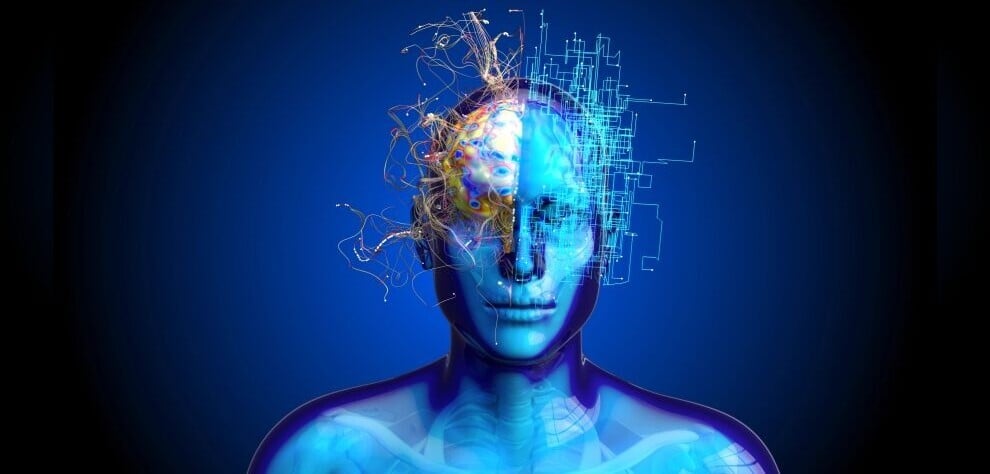

Neural implants and brain‑computer interfaces (BCIs) are developing quickly, bringing forward questions about the ethical implications of brain‑computer interfaces, neurotechnology ethics, and mental privacy. As these systems move from clinical therapy to broader applications, concerns emerge about identity, autonomy, data ownership, and the societal consequences of neural augmentation. Understanding risks is essential for developing responsible neurotechnology that protects human dignity and cognitive freedom.
Neural data originates from the brain’s electrical activity and can reflect patterns associated with intentions, emotional states, or preferences. Neural data concerns parallel broader debates about biometric surveillance and mental privacy, as explored in our analysis of AI surveillance and digital rights.
This makes it fundamentally different from other biometric data. Concerns include unauthorized data collection, commercial use of neural signals, and profiling based on neural responses.
This risk is empirically recognized in neuroethics and supported by documented concerns about neural data sensitivity. These ethical questions overlap with broader AI governance issues, including those discussed in our overview of AI ethics frameworks.
DBS can influence how a person experiences their own actions. Documented effects include shifts in personality, impulsive behavior, mood changes, and a subjective sense of reduced control (“this doesn’t feel like me doing it”). These effects vary across patients and can sometimes be adjusted by modifying stimulation parameters.
This risk is empirically confirmed in clinical studies involving DBS patients.
Identity is shaped by memory, emotion, motivation, and behavior. DBS can influence all of these domains. Some patients describe feeling unlike their previous selves, reporting changes in motivation or emotional responsiveness. These effects do not imply that DBS “replaces” identity, but they show that neural modulation can alter traits tied to psychological continuity. These effects relate to broader philosophical debates about psychological continuity. Related questions about identity and psychological continuity also appear in discussions of digital twin brain models.
This risk is empirically supported by patient reports and neuroethical analyses.
Medical risks include infection, bleeding, electrode degradation, inflammation, and hardware malfunction. Neuralink reported electrode retraction and reduced signal quality in its first human participant, illustrating the mechanical challenges of long‑term implantation. Non‑invasive alternatives are also emerging, including ultrasound‑based systems described in our overview of non‑invasive BCI technologies.
These risks are empirically confirmed in clinical practice and device safety studies.
There are no documented cases of hacking invasive neural implants in clinical settings. However, wireless implants could be vulnerable if not properly protected.
This risk is theoretical but technically plausible based on security analyses.
Neural data raises a fundamental question: who owns it? Stakeholders may include device manufacturers, hospitals, insurers, and commercial platforms. Chile became the first country to constitutionally protect mental privacy and neurodata, setting a precedent for future legislation.
This issue is empirically and legally confirmed through Chile’s constitutional neurorights framework.
Neural augmentation could widen existing inequalities. If enhancement technologies become available only to those who can afford them, disparities may deepen. There is also the possibility of discrimination based on neural profiles. Similar concerns arise in the context of neuro‑robotics, where access to augmentation technologies may deepen existing disparities
This risk is theoretical and based on predictive ethical analysis rather than empirical evidence.
Neuralink develops fully implantable, wireless BCIs designed to decode neural activity associated with intended speech. The system records signals from speech‑motor cortex and uses machine‑learning models to translate them into text. This approach aims to restore communication for individuals with severe paralysis or speech impairments.
Neuralink’s first human participant demonstrated that the implant could decode attempted speech at meaningful speeds, although challenges such as electrode retraction and long‑term signal stability remain. This area is experimental but grounded in real human BCI research. These developments complement broader advances in neurotechnology covered in our neurotechnology insights.
Stanford’s neuroprosthetics team has developed one of the fastest speech‑decoding BCIs to date. Using intracortical electrodes implanted in speech‑motor cortex, their system decodes phonemes and words in real time. In controlled clinical research, participants achieved communication rates of up to 62 words per minute, approaching natural speech speed.
Unlike Neuralink’s fully implantable system, Stanford’s setup uses wired electrodes connected to external hardware, allowing high‑fidelity signal processing but limiting real‑world usability.
The decoding performance achieved in these studies is closely related to innovations in spiking neural networks, which mimic biological neural activity.
This area is experimental and demonstrated only in controlled clinical research.
Brain‑to‑brain communication experiments have shown that simple signals can be transmitted between individuals using EEG‑TMS systems. These experiments raise questions about consent, autonomy, and interpersonal influence, but they have no clinical application.
This area is experimental and demonstrated only in controlled laboratory settings.
Optogenetics can activate memory engrams or induce false memories in mice. These findings are scientifically significant but have no human application. Ethical concerns include identity, consent, and the potential misuse of memory manipulation technologies. This area is preclinical and demonstrated only in animal models.
Relevant frameworks include:
OECD principles for responsible innovation
UNESCO bioethics guidelines - UNESCO has already proposed global ethical standards for neurotechnology, which we explore in detail in our article on UNESCO neurotechnology ethics.
the EU AI Act (high‑risk systems) - Neurotechnology systems may fall under high‑risk AI categories, as outlined in our guide to EU AI Act high‑risk requirements.
Chile’s constitutional neurorights
These frameworks aim to protect mental privacy and ensure responsible development. This area is empirically grounded in existing policy frameworks.
Neural implants offer significant clinical benefits, but they also raise ethical questions that require careful attention.
Some risks such as changes in personality, agency, and electrode degradation are empirically confirmed. Others such as hacking, brain‑to‑brain communication, and memory editing remain theoretical, experimental, or preclinical.
Responsible development depends on transparent governance, protection of neural data, and ongoing evaluation of psychological and social impacts. These developments connect to broader debates about the future of human–technology interaction, discussed in our reflection on the future of technology and humanity.
Clinical experience shows that these technologies can be helpful, but some risks such as security threats or memory manipulation remain limited to theory or laboratory research, yet still deserve attention.
As neurotechnology moves beyond medical use, it becomes important to define who is allowed to collect neural data, how that data is protected, what it means to preserve identity in a world where brain activity can be recorded and interpreted. Early legal steps, such as Chile’s neurorights provisions, suggest that society is beginning to prepare for these changes. Ultimately, progress in this field will depend on how carefully we consider its psychological, social, and ethical implications.
To understand how ethical and regulatory pressures will influence the evolution of neural interfaces, explore our timeline in BCI 2026–2032.
Cognitive privacy concerns, identity and agency changes, safety issues, data ownership, and potential social inequality.
Yes. Clinical studies document changes in mood, impulsivity, and decision‑making in some patients.
Ownership is unclear in most jurisdictions. Chile is the first country to legally protect neurodata.
Only in laboratory experiments with simple signals.
Not in humans. Memory editing has been demonstrated only in animal models using optogenetics.
Some patients report changes in motivation, emotional responses, or how they experience their own actions, suggesting that implants can influence aspects tied to personal identity.
There are no confirmed cases in clinical settings, but wireless systems could be exposed to security risks if not properly protected.
References:
Gilbert, F. (2012). Deep brain stimulation and posthuman identity: A response to Schermer. Neuroethics, 5(1), 55–66.
Ienca, M., & Haselager, P. (2016). Hacking the brain: Brain–computer interfacing technology and the ethics of neurosecurity. Ethics and Information Technology, 18(2), 117–129.
Liu, X., Ramirez, S., Pang, P. T., Puryear, C. B., Govindarajan, A., Deisseroth, K., & Tonegawa, S. (2012). Optogenetic stimulation of a hippocampal engram activates fear memory recall. Nature, 484(7394), 381–385.
Neuralink. (2024). Update on the first human participant. Neuralink Corp.https://neuralink.com/blog/
Pais‑Vieira, M., Lebedev, M., Kunicki, C., Wang, J., & Nicolelis, M. A. (2013). A brain‑to‑brain interface for real‑time sharing of sensorimotor information. Scientific Reports, 3, 1319.
Ramirez, S., Liu, X., Lin, P. A., Suh, J., Pignatelli, M., Redondo, R. L., Ryan, T. J., & Tonegawa, S. (2013). Creating a false memory in the hippocampus. Science, 341(6144), 387–391.
Rao, R. P. N., Stocco, A., Bryan, M., Sarma, D., Youngquist, T., Wu, J., & Prat, C. (2014). A direct brain‑to‑brain interface in humans. PLOS ONE, 9(11), e111332.
Royal Society. (2021). Neural interfaces: Ethical and policy issues. The Royal Society.
Schüpbach, M., Gargiulo, M., Welter, M. L., Mallet, L., Béhar, C., Houeto, J. L., Maltête, D., Mesnage, V., Bonnet, A. M., Pidoux, B., Dormont, D., Navarro, S., Cornu, P., & Agid, Y. (2006). Neurosurgery in Parkinson disease: A distressed mind in a repaired body? Neurology, 66(12), 1811–1816.
UNESCO. (2023). Ethical considerations of neurotechnology. UNESCO Publishing.
Yuste, R., Goering, S., Arcas, B. A. Y., Bi, G., Carmena, J. M., Carter, A., Fins, J. J., Friesen, P., Gallant, J., Huggins, J. E., Illes, J., Kellmeyer, P., Klein, E., Marblestone, A., Mitchell, C., Parens, E., Pham, M., Rubel, A., Sadato, N., … Wolpaw, J. (2017). Four ethical priorities for neurotechnologies and AI. Nature, 551(7679), 159–163.
Explore related pillars
👉 Brain Science Guide – Neuroscience, cognition, and brain‑inspired AI.
👉 Ethics Guide – Responsible and transparent AI principles.
👉 AI Trends Guide – Emerging AI technologies and future developments.
Browse all Neurotecnology articles👉 Neurotechnology
For a full overview of Neurotechnology, visit the main Guide.
→ https://www.nexsynaptic.com/neurotechnology
🔙 Return to the beginning of the journey
Explore more topics:
Ethics • AI Trends • Neurotechnology • Digital Safety • Brain Science • AI Tools • Technology