AI trends
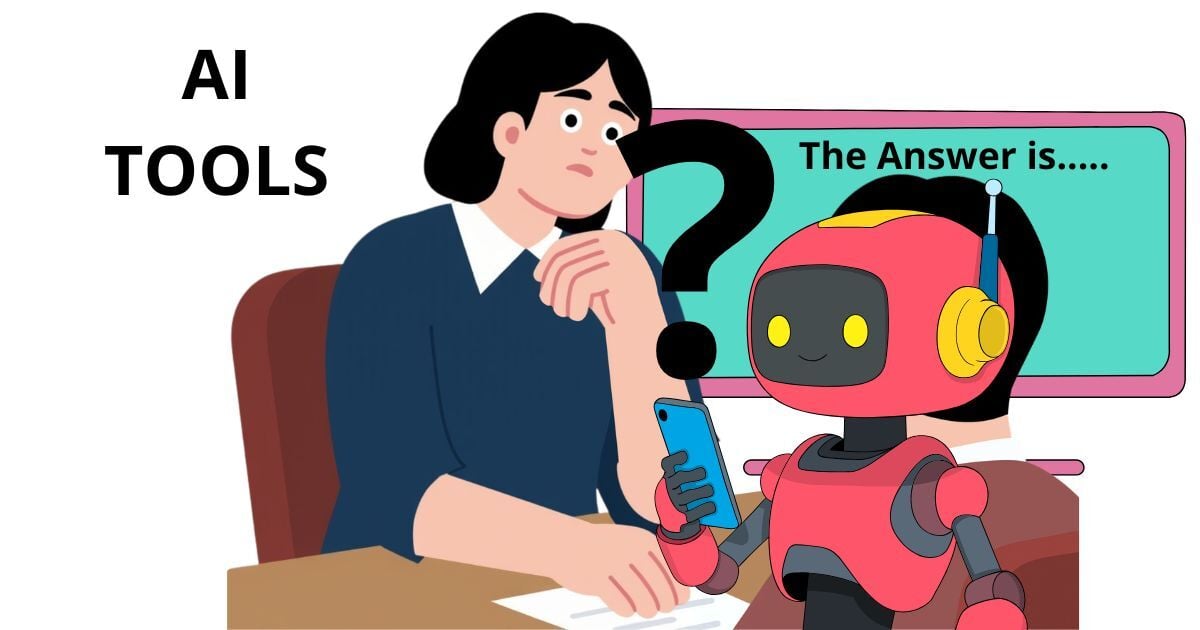

How we work and how companies hire is changing. Remote work has, for the most part, settled in as the default model, and digital tools, especially AI, have become deeply embedded in everyday business operations.
Even though around 40% of Fortune 500 companies already have some form of AI policy, many organizations are still caught off guard by how quickly AI is entering the interview process.
This is exactly the space where vibe interviewing has emerged a trend that’s quietly reshaping how candidates prepare, respond, and present themselves, while raising new questions about fairness, ethics, and transparency.
Vibe interviewing describes a growing practice where candidates rely on AI tools during the interview itself.
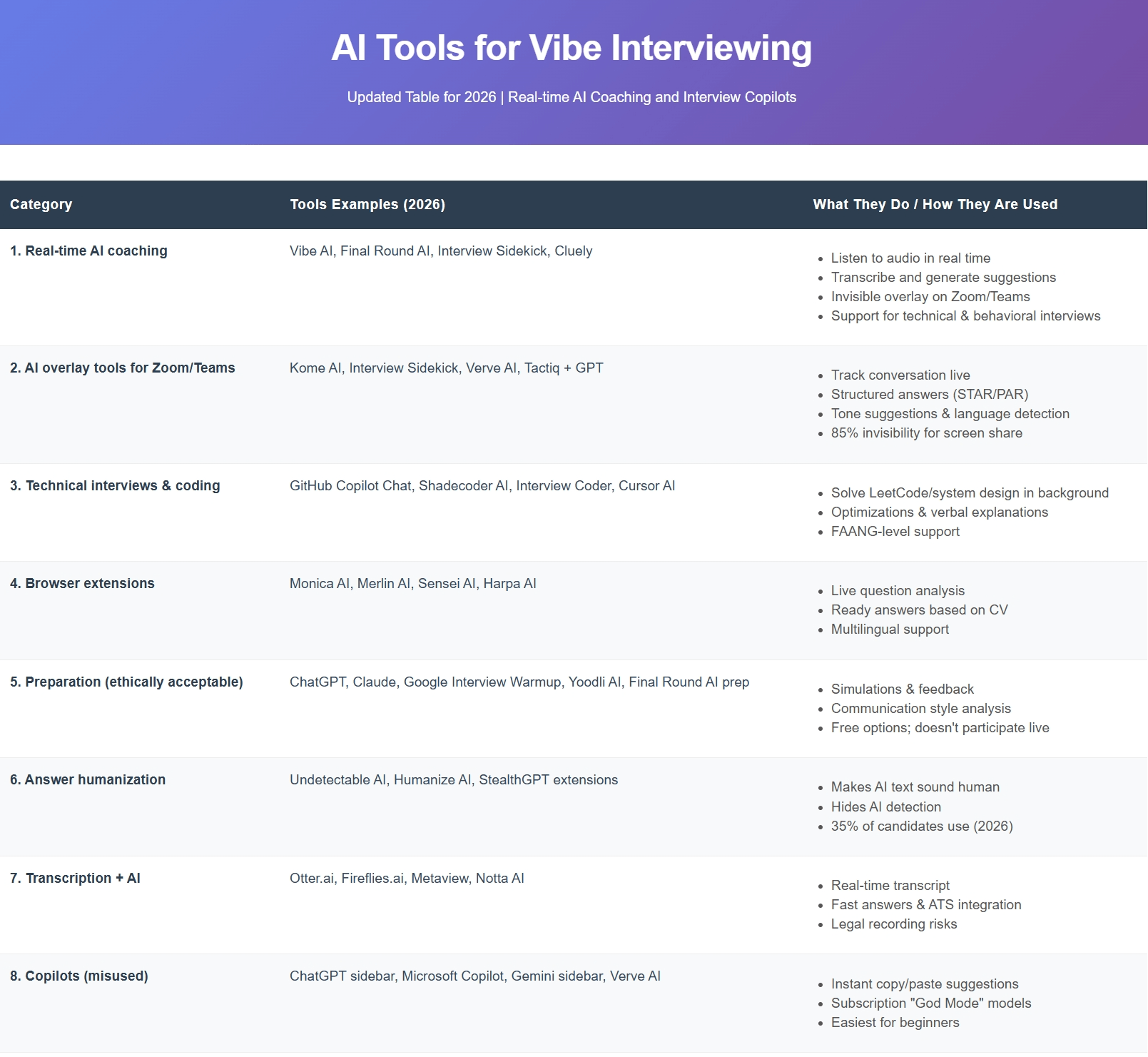
These tools can listen to the conversation and suggest answers, analyze tone and delivery, offer ready‑made responses to technical or behavioral questions, or run as invisible overlays on platforms like Zoom, Teams, or Meet. Some candidates use them simply to stay calm and structure their thoughts.
The challenge for employers is that even with improved detection methods gaze tracking, speech‑pattern analysis and similar tools, identifying AI assistance is still far from perfect. Current systems catch roughly 75% of cases, but a significant portion remains almost impossible to spot.
By 2026, nearly 78% of white‑collar interviews take place online. That shift gives candidates more control over their environment and more opportunities to use AI tools discreetly. It also reduces the nonverbal cues recruiters rely on.
What used to be experimental is now free, browser‑based, and designed for real‑time use. Between 25% and 45% of tech candidates openly admit using AI during interviews. Even major companies like Google and Meta are testing interview formats where AI assistance is allowed.
With global competition increasing, many candidates feel compelled to use any tool that gives them an edge.
Most HR departments still operate with pre‑AI assumptions. Many lack:
Candidates should know what’s allowed and what isn’t before the interview begins.
Allowed: preparation tools, simulations.
Not allowed: real‑time coaching, invisible overlays.
Enforcement can be as simple as a verbal confirmation and basic proctoring.
AI can polish an answer, but it can’t create depth where there is none.
Vibe interviewing is a clear signal that hiring practices need to evolve.
Statistics show that AI helps about 45% more candidates pass initial screening, yet only 12% perform well in deeper technical rounds.
A practical approach includes:
Because companies that don’t adapt will lose talent.
Gen Z and Gen Alpha are entering the workforce with AI as a natural part of how they think and work. Organizations that ignore this shift risk missing out on the very people who will drive their future growth.
Smart companies are already adjusting: clear rules, transparent expectations, and assessments designed for the AI era lead to better hiring decisions.
AI Transparency: This article was written by the author. AI tools were used to support editing and grammar refinement. This article contains AI‑generated images. The final version was reviewed by a human.
Vibe interviewing refers to candidates using AI tools during the interview to assist with real‑time responses. These tools can listen to the conversation, suggest answers, analyze tone, or provide structured replies through invisible overlays on platforms.
Three main factors drive its rise:
Remote interviews dominate, with nearly 78% of white‑collar interviews happening online.AI tools are widely accessible, free, and designed for real‑time use. Candidate pressure is increasing, pushing people to use any tool that gives them an advantage.
Acceptable use includes preparation, analyzing job descriptions, and practicing interview questions. Unacceptable use includes real‑time answer generation, AI listening to the interview, whispering technical solutions or replacing independent thinking.
Explore related pillars
👉Digital Safety Guide - A framework for privacy and safe digital ecosystems.
👉Neurotechnology Guide - A framework for neural data, BCI technologies, and neuromorphic computing.
🔙 Return to the beginning of the journey
Explore more topics:
Ethics • AI Trends • Neurotechnology • Digital Safety • Brain Science • AI Tools • Technology