


Ethics
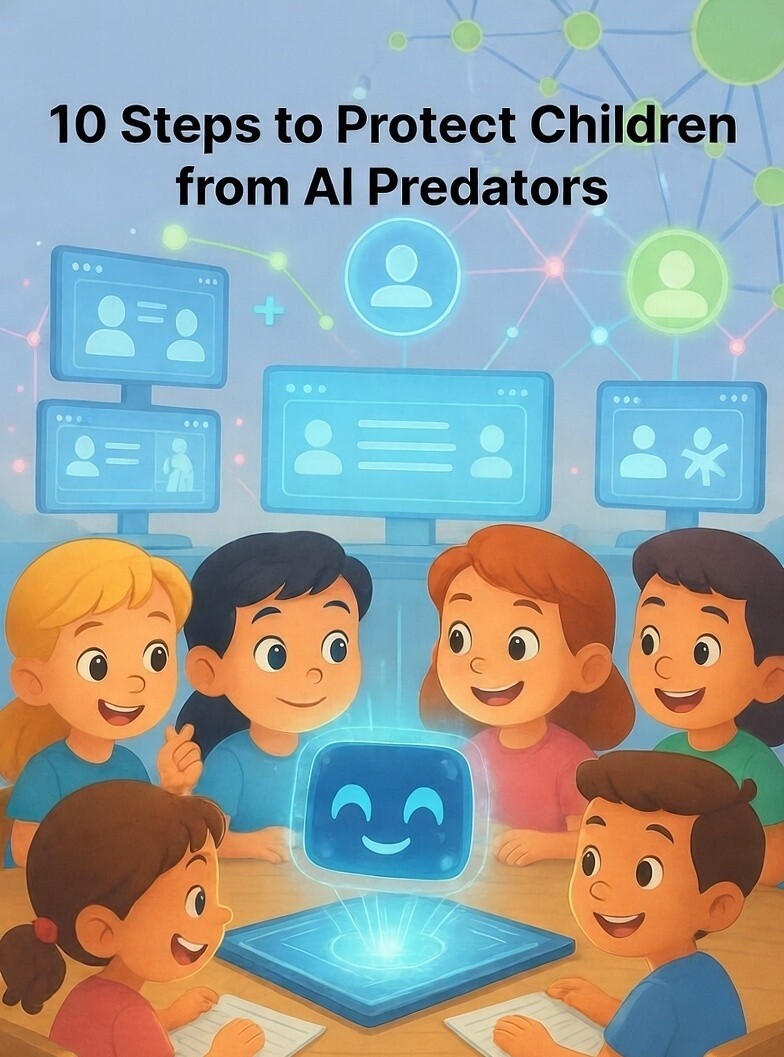

From smart toys, educational apps, chatbots, social media platforms, AI is a powerful tool for learning and entertainment. But alongside the benefits, there’s a darker side: predatory AI systems that exploit children’s trust and vulnerability.
Parents need to stay informed, recognize the warning signs, and take steps to keep their children safe. For practical steps parents can take today, our Safer Internet Day guide offers simple habits that significantly reduce digital risks.
Because predatory AI is not a distant threat, it is already here, for example:
Chatbots on the Character AI platform encouraged teenagers to engage in unsafe conversations. AI-powered toys recorded children’s voices and transmitted the data to manufacturers. Social media algorithms pushed harmful or manipulative content to young users.
The manipulative patterns seen in predatory AI systems also violate basic AI ethics guidelines, including transparency, consent, and child‑specific protections. .
Pay attention to the following:
Too many personal questions: asking for name, address, school, or photos.
Overly friendly tone without boundaries: presenting itself as a “best friend” to gain trust.
Inappropriate content: recommending violent, sexualized, or disturbing material.
Hidden data collection: recording voice, video, or location without clear explanation.
Encouraging secrecy: persuading children not to tell parents about conversations or activities.
We explore these risks in more depth in our guide How to Protect Children, which explains how predators use AI tools, games, and chatbots to reach children.
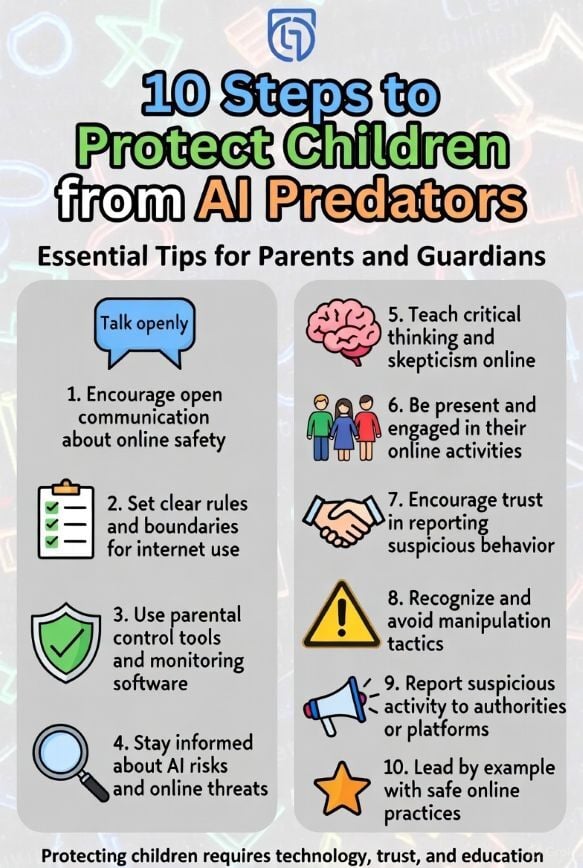
Set up parental controls: use filters and monitoring tools.
Talk openly with your children: explain that AI is not a real friend.
Check apps before use: install only trusted educational or entertainment tools.
Be present: observe how your child interacts with AI toys, chatbots, or platforms.
Check apps before installation – only use verified AI tools with clear privacy policies.
Set up parental controls – enable filters and time limits.
Talk openly to your children – encourage them to report unusual messages.
Be present – monitor AI interactions regularly.
Learn together – practice spotting manipulation and misinformation.
Limit data sharing – forbid entering personal details into AI apps.
Check permissions – disable microphone, camera, or location unless necessary.
Monitor content recommendations – watch for violent or inappropriate suggestions.
Establish transparency rules – children should know parents can see their digital activity.
Update your knowledge regularly – follow news about AI risks and safety tools.
These threats highlight why strong digital safety practices are essential for every family navigating AI‑powered technologies. .
This checklist can literally be placed on the fridge as a reminder for the whole family.
📤 Share this checklist with other parents, teachers, and caregivers. Together, we can make sure AI becomes a tool for learning and creativity, not exploitation.
For the full analysis of the updated EU AI Act timeline and the new 2026–2027 obligations, and the latest rules addressing AI‑generated abuse, read our article.
Explore related pillars
👉 Ethics Guide – Principles for safe and fair AI.
👉Technology Guide – Infrastructure behind digital security.
👉 AI Tools Guide – Tools that support secure digital practices
Browse all Digital safety articles👉 Digital safety
Read more about Digital Safety & AI Risks👇
How to Recognize AI Hallucinations
🔙 Return to the beginning of the journey
Explore more topics:
Ethics • AI Trends • Neurotechnology • Digital Safety • Brain Science • AI Tools • Technology