

ai-trends

Meta ordered to pay $375 million in New Mexico trial over child exploitation, user safety claims
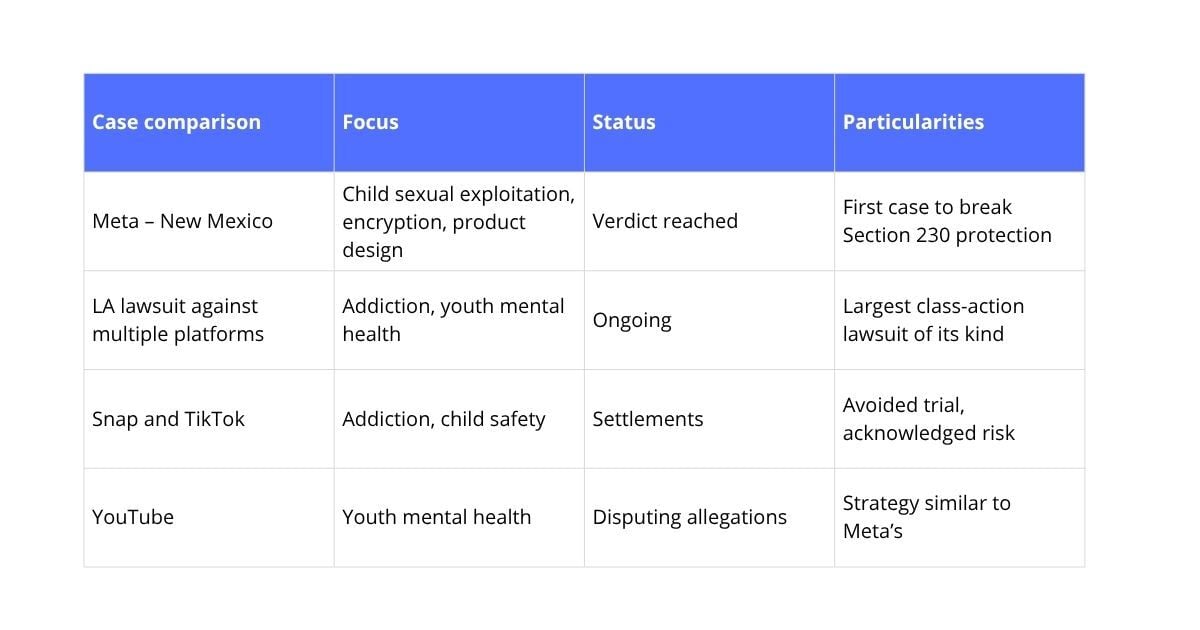
A jury verdict in New Mexico, which found Meta responsible for harm caused to children and imposed a $375 million penalty, is a precedent that could reshape how social networks are held accountable for user safety, how they design their algorithms, and how they manage encryption.
The New Mexico jury concluded that Meta:
It was particularly emphasized that Meta’s 2023 decision to introduce full encryption in Messenger prevented access to key evidence in cases of child sexual exploitation. Meta has announced it will appeal the verdict.
The court rejected Meta’s attempt to invoke Section 230, a law that protects tech platforms from liability for user-generated content, concluding that the lawsuit does not concern content but product design.
This is a key precedent.
If platforms can be held liable for design that enables harm, then:
The New Mexico case is part of a broader wave of legal actions against social networks.
The most significant among them is the massive lawsuit in Los Angeles, where hundreds of families and school districts accuse Meta, Snap, TikTok, and YouTube of intentionally designing platforms to create addiction among young people, leading to:
The New Mexico case differs in that it is based on concrete evidence of sexual exploitation, while the LA lawsuit deals with broader psychological effects of algorithms.
Algorithms are the heart of social networks. They determine what users see, how long they stay on the platform, and what emotional reactions they experience.
Possible consequences for algorithms:
Regulators may require platforms to explain:
Independent experts could be granted authority to review algorithms and assess their safety.
Encryption is one of the most sensitive issues in digital security. On one hand, it protects user privacy. On the other, it can hinder investigations of child abuse.
In Meta vs. New Mexico, the court heard testimony that full encryption in Messenger prevented access to key evidence of child sexual exploitation.
This is the first time encryption has been explicitly linked to a platform’s legal liability.
This verdict marks the beginning of a new era in which tech platforms are treated as manufacturers who must ensure user safety, rather than passive intermediaries.
Likely changes include:
If design enables harm, the platform may be held liable.
If algorithms can no longer promote addiction, platforms will need new ways to retain users.
The verdict against Meta in New Mexico (which Meta has already announced it will appeal) is a legal victory for families and children and a signal that the era of uncontrolled social media growth is ending.
This case is a precedent that could reshape how social networks design their algorithms, manage encryption, and ensure user safety.
Algorithms, encryption, and product design can no longer be considered neutral technological tools.
Read more about Digital Safety & AI Risks👇
How to Recognize AI Hallucinations